
Build a consistent content system is the key to staying productive and avoiding burnout in modern content creation. In the year 2025 and heading into 2026, the creator economy in the United States and the United Kingdom is not just about being creative. It is about having systems in place, being able to scale, and being sustainable.
According to industry reports from 2025, more than 68 percent of creators say burnout is the biggest thing that stops them from growing, while a 2026 market analysis shows that creators who use artificial intelligence-powered workflows can publish content 2 to 4 times more consistently without working more.
This change is very important. Because the real problem is not that creators lack ideas. It is that they lack systems that they can repeat over and over.
In this guide, you will learn how to build a high-performance artificial intelligence content system that turns content creation into a structured, scalable workflow. Without sacrificing the quality of the content or burning out.
Why Creators Burn Out (And Why AI Alone Doesn’t Fix It)
Most creators use artificial intelligence in the wrong way.
They use tools like ChatGPT or automation platforms without having a system in place.
The real causes of burnout:
- pressure to post content every day on multiple platforms
- Having to create content from scratch every time
- Not having a structured pipeline to follow. From coming up with an idea to creating the content, to distributing it and repurposing it
- Having to do tasks like editing, formatting, and scheduling the content
Artificial intelligence does not solve the problem of burnout unless it is part of a workflow.
That is why you should first understand the picture: 7 AI Workflows for Creators in 2026: Create Faster Without Losing Quality.
The Shift: From “Content Creation” to “Content System”
Creators in the US and UK are not just posting things online anymore. They are running what you can call content systems.
A consistent content system includes the following:
- Idea generation engine
- Content production pipeline
- Repurposing mechanism
- Distribution automation
- Performance feedback loop
Instead of asking:
”What should I post today?”
You start asking:
“What does my system produce this week?”
This is a different way of thinking.
Step 1: Build an AI-Powered Idea Engine (Not Just Brainstorming)
This is not about thinking of ideas. Most creators spend a lot of time trying to come up with ideas. A better way is to use machines to help generate ideas based on data.
Practical Workflow:
Use tools like ChatGPT or other similar tools.
- Look at what’s trending on Google Trends in the US and UK markets.
- You can also look at comments on YouTube and LinkedIn.
- You can use n8n or Zapier to help you with this.
Example Prompt:
“Generate 20 content ideas for a UK-based freelance designer focusing on AI tools, based on current trends and audience pain points.”
Advanced Strategy:
- If you want to do more, you can store your ideas in Google Sheets or Notion.
- Use n8n to add topics every day.
- You can tag your ideas by the platform you will use, like LinkedIn or YouTube.
- You can also tag them by the type of content, like educational or tutorial.
Result: You will never run out of content again.
Content systems like this can really help you. You will have a lot of ideas for content. You can use them to make a lot of different things. This is what top creators in the US and UK are doing now. They are using content systems to make their work easier and better.
Step 2: Create a Repeatable Content Production Workflow
This is where most creators fail. They rely on “motivation” instead of a system.
AI Content Production Stack:
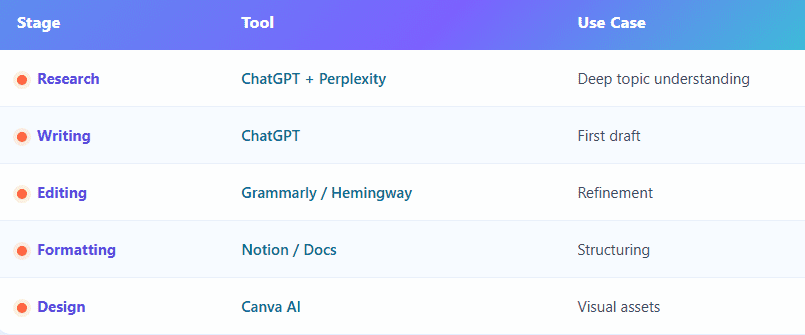
Creating consistent content helps you build trust and stay visible across platforms. AI tools make it easier to maintain consistent content without feeling overwhelmed.
Real-World Scenario (US Freelancer):
A content strategist charges one thousand five hundred dollars per month, which is around twelve hundred pounds, for content packages.
When using artificial intelligence:
- It cuts down production time by sixty percent.
- Now they can manage three to four clients at a time of just one or two.
- This results in a monthly income without getting burnt out.
Step 3: Turn One Idea Into 5–10 Pieces of Content
This is where you really start to see results.
For a full deep dive, see the following: How Creators Can Use AI to Turn One Idea Into Videos, Posts, Newsletters, and Shorts.
Example System:
One blog post can become the following:
- A LinkedIn article
- A Twitter thread
- An Instagram story with slides
- A short YouTube video
- An email newsletter
AI Workflow:
- Use ChatGPT to change the format of your content
- Use tools like Opus Clip to make short video clips
- Use Canva AI to create social media slides
This can help you make five times the content without working extra hard.
Step 4: Automate Repetitive Tasks Using n8n or Zapier
As a creator, you often waste time on:
- Scheduling posts
- Posting updates
- Formatting text
- Organizing files
Automation Example (n8n Workflow):
- New blog published
- Auto-generate social posts using GPT
- Send to Google Sheets
- Schedule via Buffer or Hootsuite
Step 5: Build a Weekly Content System (Not Daily Stress)
of dealing with the chaos of daily posting, I think it is better to use a weekly workflow.
Use a Weekly Workflow:
- Monday: Idea generation
- Tuesday: Content creation
- Wednesday: Editing + design
- Thursday: Scheduling
- Friday: Analytics + optimization
Why This Works:
I like this system because it reduces the fatigue of making many decisions, and it creates a sense of predictability. This system also works with how agencies operate.
According to the market analysis in 2026, people who use a weekly system say they have the following:
- 40 percent higher consistency
- lower burnout rates
Step 6: Maintain Authenticity (Avoid Generic AI Content)
One big problem is that the content can sound like it was written by a machine.
You should read this: How to Use AI to Grow a Personal Brand Without Sounding Generic
Best Practices:
- Add your own thoughts and opinions
- Use examples from clients
- Do not just publish what the AI gives you
- Change the tone for people in the US and the UK
Example:
Instead of:
“AI helps improve productivity.”
Say:
“In my experience managing freelance clients in the UK market, AI reduced content turnaround from 5 days to 2 without compromising quality.”
Step 7: Build a Feedback Loop (This Is Where Growth Happens)
A lot of people who create things do not pay attention to analytics. They need to use analytics to see how their content is doing. You can use AI and analytics to make your content better.
AI + Analytics Workflow:
Track how your content is performing, like how many clicks it gets and how many people are engaging with it. Then you can use this information to ask questions like why did this piece of content do better than the others?
You can use tools like Google Analytics and LinkedIn Analytics to get this information. You can also look at email rates to see how many people are opening your emails.
This will make your system better over time because it is always learning and improving.
Step 8: Ethical AI Use (Trust = Long-Term Growth)
People are starting to care about trust when it comes to the things they see online. This is not just important for Google. Also, for the people who are looking at your content.
You should really read this: How Creators Can Use AI Responsibly in 2026 Without Hurting Trust, Quality, or Audience Connection
Guidelines:
You should tell people when you are using AI to make something.
You should not give people information.
You should try to make valuable things, not just a lot of things.
AI Content System vs Traditional Creation (Comparison)
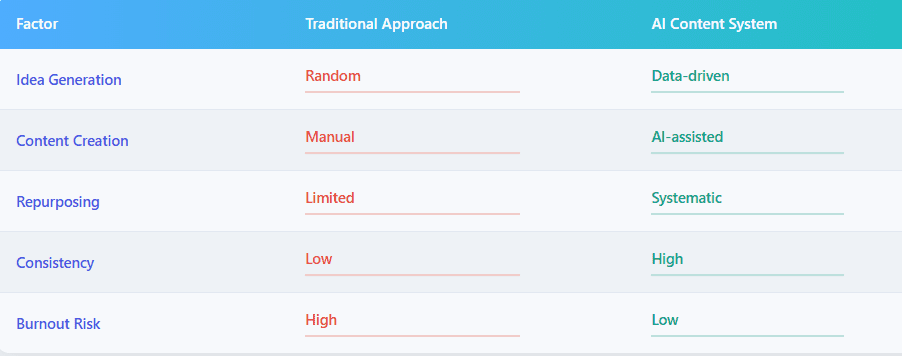
The goal is not more content but consistent content that delivers value. Creators who focus on consistent content grow faster over time.
Pros & Cons of Using AI for Content Systems
Pros:
- Reduces the workload a lot
- Makes content consistent. Increases output
- Helps scale content without hiring people
- Improves return on investment for freelancers and agencies
Cons:
- Can lead to content if not used carefully
- Needs initial setup time
- Can be hard to learn tools like n8n
- Much automation can make content less genuine
Final Thoughts: Treat Your Content Like a System, Not a Task
Most creators struggle because they don’t have a plan for producing consistent content. To succeed in 2026, you need to change how you think. You are not just making content. You are running a content production system.
The creators who succeed will:
- Create workflows for waiting for motivation
- Use AI in a way that is not just random
- Focus on consistency, quality, and getting more done with less
A system helps you produce consistent content without relying on motivation. Burnout doesn’t come from working hard. It comes from not having a plan. Fix the system. Everything else will fall into place.
FAQ
-
Can AI completely replace content creation for creators?
No. AI enhances speed and efficiency, but human insight, storytelling, and positioning remain critical for trust and engagement.
-
What is the best AI tool for content systems in 2026?
There is no single tool. A stack including ChatGPT, n8n/Zapier, Canva AI, and analytics tools works best.
-
How much does it cost to build an AI content system?
You can start with:
$20–$50/month (~£16–£40) using Zapier
Or near $0 using self-hosted n8n -
How do I avoid sounding robotic with AI content?
Always edit outputs, add personal experience, and tailor tone to your audience (US/UK markets).
-
Is AI content safe for AdSense approval?
Yes — if it meets E-E-A-T standards, provides value, and is not spammy or auto-generated without editing.

Muhammad Hashir Khan is the founder and author of Pushtopeak and a BSCS graduate with over 3 years of experience in artificial intelligence, data science, and software development. His focus is on understanding how AI tools work in practical scenarios and how they can be applied to improve productivity and workflow efficiency. Through his writing, he shares structured insights to help freelancers and professionals use AI tools more intelligently and strategically.